Fitzroy & South Melbourne showrooms
Open weekdays 9am – 5pm
Your bathroom should be a space of comfort, function, and style. With the right tiles, you can create a space that feels luxurious, calming, or creatively bold, no matter the size or layout.

The best bathroom tile ideas combine form with function. Tiles must be durable, slip-resistant, and easy to clean—but they also define the entire atmosphere of the space. Whether you’re aiming for a minimalist retreat or something more textured and expressive, choosing tiles that are both beautiful and practical is key.
Tiento offers a thoughtfully curated collection of bathroom-suitable tiles that balance visual appeal with long-term performance.
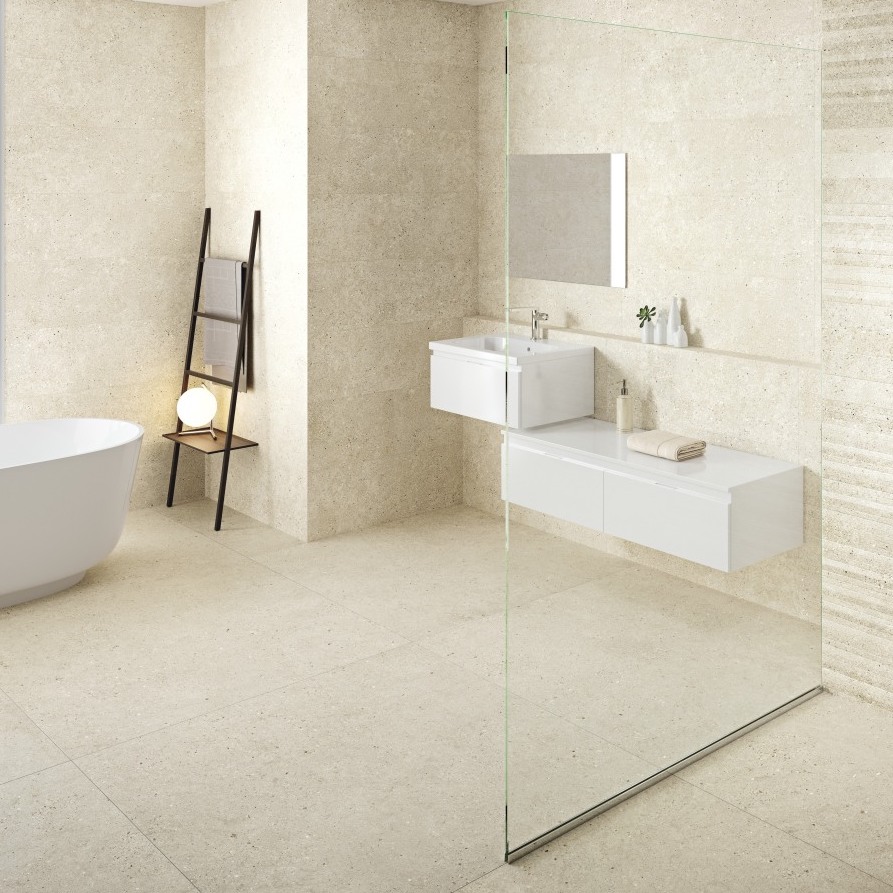
In smaller bathrooms, tile pattern and scale can make a major impact. Using large-format tiles across floors or walls helps reduce grout lines, creating the illusion of more space. Alternatively, playing with tile orientation—like stacking vertically—can add height to low-ceilinged rooms.
Textured tiles such as Mapierre Ligne are ideal as a feature behind vanities or within shower niches, adding depth and a bespoke touch without overwhelming the room.
Today’s bathrooms embrace a more tactile and natural aesthetic. Some key trends include:
These styles bring character and warmth to bathrooms, helping them feel less clinical and more lived-in.
Porcelain remains the most reliable material for bathroom applications. It’s highly resistant to moisture, incredibly durable, and available in a vast range of finishes and textures. Matte porcelain is often preferred for floors due to its slip resistance, while gloss finishes can brighten up feature walls and add light reflectivity.
For a deeper dive into the differences between materials, this article breaks down porcelain vs ceramic tiles in more detail.
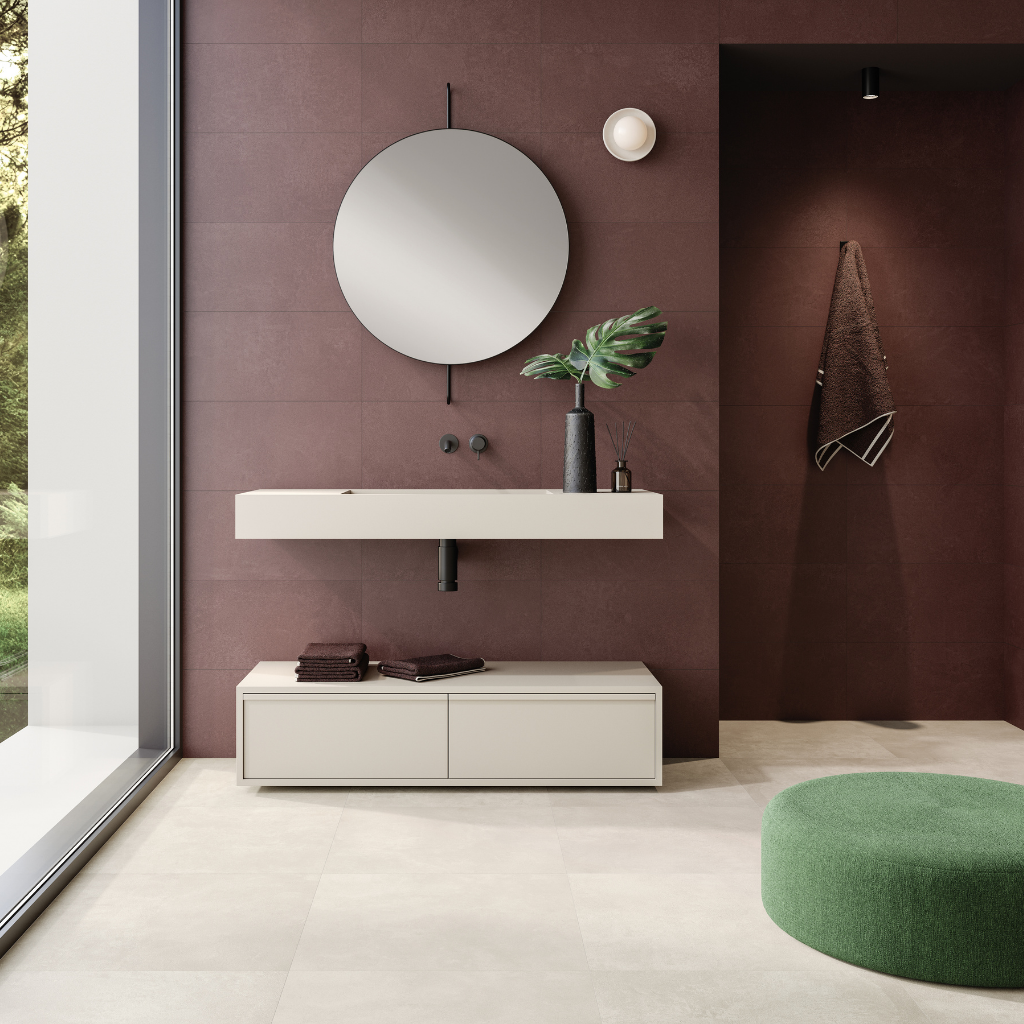
Colour plays a significant role in shaping how a bathroom feels. Light neutrals such as white, pale grey, or soft beige can make small bathrooms feel larger and more open. On the other hand, rich hues—like forest green or charcoal—can be used to add depth or drama, especially when applied to a single wall or tiled floor.
If you’re feeling adventurous, colour drenching (using a single hue across walls and floors) is an emerging trend that creates a cohesive, immersive environment—particularly effective in powder rooms or ensuite bathrooms.
In open or spacious bathrooms, tiles can be used strategically to separate functional areas without disrupting the overall design. For instance, contrasting floor tiles beneath a freestanding bath can subtly frame the area, while textured wall tiles in a walk-in shower add visual distinction.
Using mosaics or small-format tiles in shelving, niches, or splash zones offers both practicality and polish—enhancing usability while keeping the palette consistent.